


Why Measuring Tear Evaporation Is Becoming Essential in Dry Eye Research and Treatment
The eye is one of the most delicate and highly exposed organs in the body. Every second of every day, it must remain protected against environmental stress, dehydration, friction, pollutants, allergens, microorganisms, and mechanical irritation.
What makes this possible is something most people rarely think about: the tear film.
Although tears are often associated only with emotions, they are actually a highly sophisticated biological system that plays a fundamental role in ocular health, vision quality, comfort, and protection. Without a stable tear film, the surface of the eye rapidly becomes vulnerable to irritation, inflammation, and damage.
For clinicians, researchers, pharmaceutical companies, veterinary specialists, and ophthalmic innovators, understanding how tears behave, especially how quickly they evaporate, has become increasingly important in the fight against dry eye disease.
The tear film is an ultra-thin layer of tears covering the eye, and it is not simply water. It is a complex, multi-component structure made of lipids, aqueous fluid, proteins, electrolytes, mucins, and immune-related substances.
The role of tears is critical:
lubricating the ocular surface
maintaining optical clarity
nourishing corneal tissues
protecting against pathogens
reducing friction during blinking
regulating surface hydration
supporting wound healing
When the tear film is healthy and stable, vision remains comfortable and clear. When it becomes unstable, the consequences can be significant.
What Happens When Tear Balance Is Disrupted?
Tear film imbalance can occur in two major ways:
Excessive Tear Production
Ironically, watery eyes can sometimes be a sign of dry eye disease. When the eye becomes irritated from insufficient lubrication, reflex tearing may occur as a defensive response. However, these reflex tears are often poor in quality and evaporate quickly, failing to restore proper ocular surface stability.
Patients may experience excessive tearing, blurry vision. fluctuating visual quality, irritation, or burning sensations.
Insufficient Tear Stability
In many cases, the issue is not necessarily producing too few tears but rather losing them too quickly through evaporation.
This is especially important because evaporation-driven dry eye disease is now recognized as one of the most common forms of dry eye worldwide.
When tears evaporate too rapidly the ocular surface dehydrates, inflammation increases, corneal cells become stressed, blinking frequency changes, discomfort escalates, and visual performance deteriorates.
Patients often describe symptoms such as:
burning
stinging
grittiness
foreign body sensation
redness
light sensitivity
contact lens intolerance
fluctuating vision
In severe cases, chronic ocular surface damage can develop.
When Does Tear Evaporation Occur?
Tear evaporation is a completely natural process that occurs continuously throughout the day. Every time the eyes are open between blinks, a portion of the tear film is exposed to the surrounding environment and begins to evaporate.
Under normal conditions, the eye constantly compensates for this natural evaporation through blinking, tear secretion, lipid layer regulation, and tear film redistribution.

A healthy tear film maintains a delicate balance between tear production and tear loss. Problems arise when evaporation exceeds the eye’s ability to replenish and stabilize the tear film.
What Is Tear Evaporation Related To?
Tear evaporation is influenced by a combination of physiological, environmental, behavioral, and pathological factors.
The Lipid Layer of the Tear Film
One of the most important factors is the outer lipid layer produced by the meibomian glands located along the eyelids.
This thin oily layer acts as a protective barrier that slows down evaporation. If the lipid layer is compromised, tears evaporate much faster.
This is why Meibomian Gland Dysfunction (MGD) is strongly associated with evaporative dry eye disease.
Blinking Behavior
Blinking helps redistribute tears evenly across the ocular surface and restores tear film stability.
Reduced or incomplete blinking can significantly increase evaporation.
This commonly occurs during prolonged screen use, gaming, reading, driving, microscope work, and surgical procedures.
Digital device use is particularly important because people blink less frequently and less completely while focusing on screens.
Environmental Conditions
Environmental exposure has a major impact on evaporation rates.
Tear evaporation increases in environments with low humidity, air conditioning, heating systems, wind exposure, airplane cabins, pollution, smoke, and high airflow.
Even workplace conditions can contribute significantly to ocular surface dehydration.
Contact Lens Wear
Contact lenses can alter tear film dynamics and disrupt tear stability.
Some patients experience increased evaporation, tear film thinning, ocular surface irritation, or lens discomfort.
Measuring tear evaporation can therefore be valuable in contact lens research and optimization.
Aging and Hormonal Changes
As people age, tear film composition often changes. Hormonal fluctuations, particularly involving androgens and estrogen, can affect, meibomian gland function, tear secretion, or lipid production.
This helps explain why dry eye disease becomes increasingly common with aging populations.
Inflammation and Ocular Surface Disease
Inflammatory conditions affecting the eyelids or ocular surface can destabilize the tear film and accelerate evaporation.
This includes:
. Blepharitis
. meibomian gland dysfunction
. ocular rosacea
. allergic eye disease
. autoimmune disorders
Inflammation and evaporation often create a vicious cycle:
. increased evaporation causes ocular stress
→ocular stress promotes inflammation
→inflammation further destabilizes the tear film
7. Surgical and Cosmetic Procedures
Certain ophthalmic and cosmetic procedures may also influence tear evaporation by
affecting blinking, corneal sensitivity, eyelid anatomy, or tear film integrity.
Examples include LASIK and refractive surgery, cataract surgery, eyelid surgery, and
aesthetic periocular procedures
This is one reason why ocular surface assessment has become increasingly important in
pre- and post-procedure evaluations.

Why Tear Evaporation Matters So Much
Tear evaporation is one of the key mechanisms behind tear film instability. If clinicians and researchers cannot accurately assess evaporation, they may struggle to fully understand the root cause of ocular surface dysfunction.
This is particularly relevant because dry eye disease is multifactorial. Two patients may present similar symptoms while having completely different physiological causes.
One patient may suffer from:
reduced aqueous tear production
Another may primarily suffer from:
excessive tear evaporation caused by lipid layer dysfunction
Without objective evaporation measurements, treatment strategies can become less targeted and less effective.
Who is Affected?
Dry eye disease can affect virtually anyone, regardless of age or lifestyle. However, certain populations are significantly more vulnerable due to physiological, environmental, occupational, or medical factors.
As awareness of ocular surface disorders grows, clinicians and researchers are recognizing that dry eye disease is far more widespread than previously believed.
Dry eye disease is becoming increasingly common across all age groups. Older adults are particularly vulnerable due to age-related changes and can increase tear evaporation and destabilize the tear film.
At the same time, modern lifestyles have dramatically contributed to the rise of evaporative dry eye, especially among people who spend long hours using computers, smartphones, tablets, and other digital screens.
Reduced blinking during screen use accelerates tear evaporation and ocular surface stress, making dry eye symptoms increasingly common among office workers, students, gamers, programmers, and remote workers.
Other high-risk populations include contact lens wearers, individuals exposed to air conditioning, pollution, low humidity, or windy environments, as well as patients with autoimmune diseases such as Sjögren’s syndrome, rheumatoid arthritis, lupus, diabetes, and thyroid disorders.
Hormonal changes, particularly in postmenopausal women, can also affect tear film stability and lipid production.
Dry eye disease is frequently associated with meibomian gland dysfunction, ocular surface inflammation, and post-surgical recovery following procedures.
Because tear evaporation plays a central role in many of these cases, objective tear evaporation measurement is becoming increasingly valuable for dry eye diagnosis, treatment monitoring, and ocular surface research.
Why Researchers Need Objective Tear Evaporation Data
Objective tear evaporation measurement is becoming increasingly important in dry eye research and ophthalmic therapeutic development. Researchers studying dry eye disease, artificial tears, meibomian gland dysfunction, ocular surface inflammation, contact lenses, and ophthalmic pharmaceuticals require reliable physiological data to better understand tear film behavior and ocular surface stability.
Because tear evaporation is closely linked to evaporative dry eye disease, accurately quantifying it can provide valuable insight into the underlying mechanisms driving ocular surface dysfunction.
Reliable tear evaporation data can help researchers identify dry eye subtypes, monitor treatment efficacy, detect subtle physiological changes, and improve the sensitivity of clinical trials and longitudinal studies.
As ophthalmology moves toward precision medicine and more personalized treatment approaches, objective ocular surface biomarkers are becoming increasingly essential for advancing dry eye diagnosis, therapeutic evaluation, and ocular surface research.
Veterinary Medicine Is Facing Similar Challenges
Dry eye disease and tear film disorders are not limited to humans. Veterinary ophthalmologists frequently encounter ocular surface disease in animals such as dogs, cats, horses, and rabbits, where tear film instability and excessive tear evaporation can contribute to irritation, inflammation, corneal damage, ocular discharge, and vision impairment.
Just like in human ophthalmology, maintaining a stable tear film is essential for protecting the ocular surface and preserving long-term eye health in animals.
Diagnosing dry eye disease in veterinary medicine can be particularly challenging because animals cannot verbally communicate symptoms such as burning, grittiness, or visual discomfort. As a result, objective tear evaporation measurement can provide valuable physiological insight for veterinary specialists evaluating ocular surface health, monitoring disease progression, and assessing treatment efficacy.
Quantitative tear evaporation assessment is becoming increasingly important in veterinary ophthalmology research and clinical care, especially for improving the diagnosis and management of evaporative dry eye disease in animals.
The Shift Toward Quantitative Ocular Surface Assessment
Modern ophthalmology is increasingly moving toward objective, reproducible, and non-invasive measurements.
Clinicians and researchers are no longer satisfied with relying solely on subjective observations.
They want:
quantifiable biomarkers
standardized protocols
repeatable measurements
higher sensitivity
better treatment monitoring
This evolution is driving interest in advanced technologies capable of directly measuring tear evaporation in a controlled and scientifically reliable way.
A New Generation of Tear Evaporation Measurement Technology |
To address these needs, specialized instruments have emerged that allow clinicians and researchers to directly quantify tear evaporation from the ocular surface.
the EyeVapoMeter™ designed specifically for ocular applications, enables non-invasive tear evaporation measurements using closed-chamber technology optimized for the eye area.
This type of technology can help:
objectively assess tear film function
improve dry eye characterization
monitor therapeutic interventions
support clinical studies
enhance reproducibility
reduce operator-related variability
For both human and veterinary ophthalmology, quantitative tear evaporation assessment is becoming an increasingly valuable component of ocular surface science.

EyeVapoMeter™
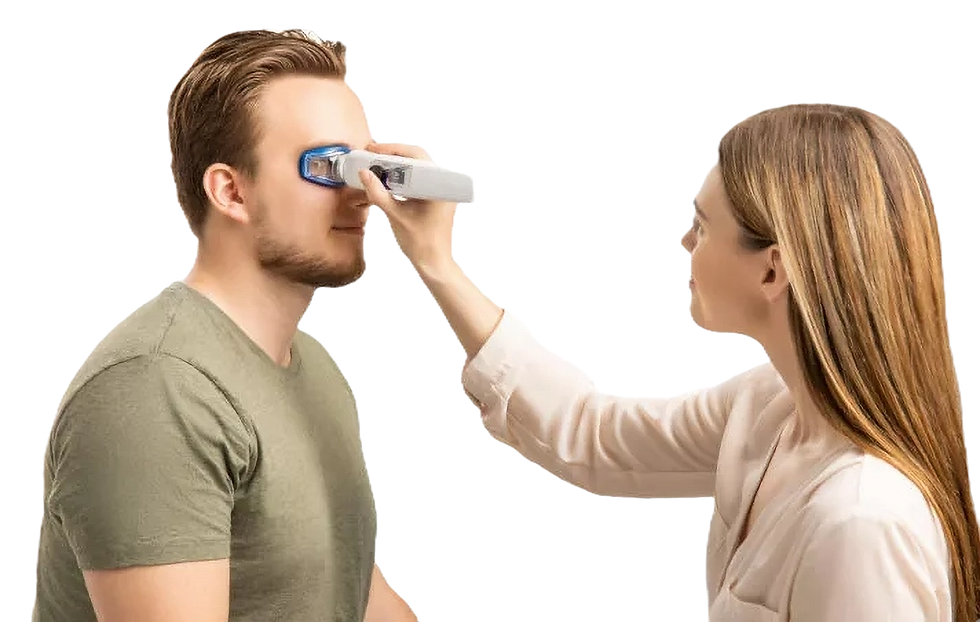
Optimized ergonomics for accurate eye assessments
What exactly does it measure?
The EyeVapoMeter™ measures the tear evaporation rate (TER) from the eye surface. In simple terms, it quantifies how quickly tears evaporate from the tear film covering the eye. This is extremely important because abnormal tear evaporation is one of the major mechanisms behind dry eye disease.
The measurement expressed in g/m2/h reflects how much water vapor escapes from the ocular surface over time.
A higher TER usually indicates:
unstable tear film
insufficient lipid layer protection
meibomian gland dysfunction (MGD)
evaporative dry eye
Lower or normalized TER after treatment can indicate that therapy is working.
What technique does it use?
The EyeVapoMeter™ uses a closed-chamber evaporimetry technique derived from VapoMeter® technology, originally developed for dermatology applications to measure transepidermal water loss (TEWL).
This underlying methodology is well established and has already demonstrated strong reliability, repeatability, and clinical relevance across numerous peer-reviewed studies and research applications in skin barrier function assessment.
By adapting this validated evaporimetry principle to ocular surface science, the technology benefits from a proven scientific foundation that has been widely used in clinical research settings worldwide.
Its established performance in dermatology strengthens confidence in its application for tear evaporation measurement, supporting its role in advancing objective dry eye diagnostics, ocular surface research, and clinical evaluation.
Measurement Principle
At the core of the system is a highly sensitive humidity sensor inside a small closed chamber.
When the chamber is positioned over the eye:
water vapor evaporating from the tear film accumulates inside the chamber
the instrument records the increase in relative humidity over a few seconds
software automatically converts this into evaporation rate values
Because it is a closed chamber, measurements are:
less affected by room airflow or drafts
more repeatable
less operator-dependent
faster than many older evaporimetry methods
Typical measurement time:
about 5–20 seconds.
CLOSED-CHAMBER MEASUREMENT PRINCIPLE | |
Relative Humidity Increase During VapoMeter® TEWL Measurement | Humidity sensor in the closed chamber ➡️ humidity inside the chamber increases ➡️ water evaporation rate (g/m2h is calculated from the slope |
 |  Nuutinen J., Alanen E., Autio P., et al. A closed unventilated chamber for the measurement of transepidermal water loss Skin Res. Technol.9:85-89, 2003 |
Why is this technology interesting scientifically?
Tear evaporation is increasingly recognized as a critical mechanism in tear film instability and tear breakup. Research literature highlights that accurate evaporimetry can improve diagnosis, subtype differentiation, treatment monitoring, and understanding of tear dynamics.
One major advantage of the EyeVapoMeter™ is that it brought evaporimetry into a:
✅ portable
✅ clinically usable
✅ standardized scientific instrument.
Earlier systems were often:
❌ bulky
❌ highly operator-dependent
❌ research-only devices
Key advantages of the EyeVapoMeter™ | |
 | Portable and wireless |
Fast measurements | |
Ready-to-use - no daily calibration | |
Closed-chamber reliability | |
High-evaporation range without saturation | |
Rotatable eye adapter for comfortable positioning | |
Independent of posture and orientation | |
Conclusion
Dry eye disease is far more complex than simply “not having enough tears.” Tear quality, stability, and evaporation dynamics all play major roles in maintaining ocular surface health.
As the prevalence of dry eye continues to rise, clinicians and researchers need more objective and reliable tools to better understand the mechanisms behind ocular surface dysfunction.
Measuring tear evaporation provides critical physiological insight that traditional assessments alone may miss. By enabling more quantitative evaluation of tear film behavior, modern evaporation measurement technologies are helping advance dry eye diagnosis, treatment development, and ocular surface research in both humans and animals.

Understanding tear evaporation is the first step.
Measuring it changes everything.
Discover Delfin’s full range of skin research Instruments at Skinlabs and see how advanced measurement tools can elevate your next research. |
PUBLICATIONS |
UNIVERSITY OF WATERLOO, Ontario, Canada
MONFARED, MANA. Studies on tear evaporation and ocular surface temperature. University of Waterloo, Ontario, Canada, 2025.
https://cronfa.swan.ac.uk/Record/cronfa68319
WILEY ONLINE LIBRARY - OPO
Swiderska K, Blackie CA, Maldonado-Codina C, Fergie M, Read ML, Morgan PB. Temporal variations in meibomian gland structure—A pilot study. Ophthalmic Physiol Opt. 2024;44:894–909.
https://doi.org/10.1111/opo.13321
https://onlinelibrary.wiley.com/doi/epdf/10.1111/opo.13321
SPINGER NATURE
Sheppard, J.D., Nichols, K.K. Dry Eye Disease Associated with Meibomian Gland Dysfunction: Focus on Tear Film Characteristics and the Therapeutic Landscape. Ophtalmol Ther 12, 1397-1418 (2023).
TAYLOR & FRANCIS
Montani, G., Landini, L., & Martino, M. (2022). Short-and-Long-Term Effects of a Multi-Component, Artificial Tear on Preocular Tear Film Stability, Tear Evaporation and Tear Film Optical Dynamic: A prospective Randomized Double-Phase Study.
Current Eye Research, 47(9), 1252-1258.


Comments